

When the warmer months wind down and temperatures start to drop across Australia, your air conditioner doesn’t get to rest, it just switches jobs. Your Panasonic Reverse Cycle Air Conditioner is built for year-round comfort, but a little preparation before winter goes a long way toward keeping it efficient, reliable, and cost-effective when you need it most.
Here’s how to get your Panasonic Air Conditioner winter-ready, from simple DIY maintenance to knowing when it’s time to call a professional.
Why Autumn Is the Best Time to Service Your Air Conditioner
Most households only think about air conditioner servicing when something goes wrong – usually in the middle of summer or on the first cold night of the year. Autumn is actually the smartest time to act.
- Your system has just finished a hard summer of work and likely needs a clean
- HVAC technicians are less busy, meaning faster appointments and better availability
- Finding a problem in April is far less stressful (and expensive) than finding one in July when you’re cold and urgent
Don’t wait for the first chilly morning to find out your heating isn’t performing. A quick autumn check-up keeps you one step ahead.
DIY Maintenance You Can Do at Home
Before winter arrives, there are a few simple things every homeowner can do themselves.
- Clean Your Filters
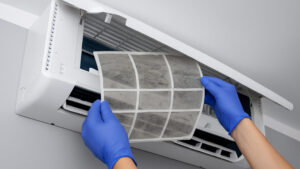
This is the single most impactful thing you can do for your system’s performance and air quality. After a full summer of use, filters accumulate dust, pollen, and debris that restrict airflow and reduce heating efficiency.
How to do it:
- Remove filters according to your Panasonic user manual
- Wash gently with lukewarm water
- Allow to dry completely in the shade before reinstalling
- Inspect for any tears or damage — if they’re compromised, replace them
- Aim to clean filters every 4–6 weeks during heavy use.
- Wipe Down the Indoor Unit
Give the exterior casing a wipe with a soft, damp cloth. Pay particular attention to the air intake grilles where dust builds up, and check that the louvers and vanes move freely. Proper airflow direction matters more in heating mode than many people realise.
- Clear Around Your Outdoor Unit
Take a walk outside and clear any leaves, grass clippings, or debris from around the unit. Make sure there’s at least 50cm of clear space on all sides, and check that no plants or shrubs have crept closer over summer. Restricted airflow directly impacts heating performance.
When to Call a Professional
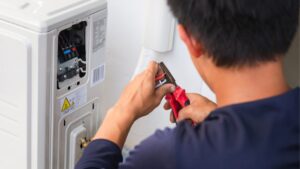
Some maintenance tasks require a licensed technician — and skipping them can cost you more in energy bills and repairs down the track.
A qualified Panasonic service technician should check:
- Refrigerant levels — Low refrigerant is one of the most common causes of poor heating performance and inflated power bills
- Electrical connections and components — Heating mode puts different demands on electrical systems than cooling; loose connections that seem harmless in summer can fail in winter
- Sensors and thermostat calibration — Mis-calibrated sensors cause your system to work harder than it needs to
- Heat exchanger condition — A dirty heat exchanger significantly reduces efficiency and can cause the system to overheat
Professional servicing once a year (ideally in autumn) is the best way to protect your investment and maintain your warranty.
Smart Settings for Efficient Winter Heating
Once your system is clean and serviced, how you use it makes a big difference to your comfort and running costs.
- Set your thermostat to 18°C–20°C. This is the sweet spot for efficient heating with a Panasonic inverter system. Higher settings don’t heat faster; they just use more electricity. Consistent, moderate temperatures are always more economical than constantly adjusting.
- Use the timer. Program your system to pre-heat the home before you wake up or arrive, so you’re walking into warmth without leaving it running all day.
- For ducted systems — use your zones. Heat the rooms you’re in, not the whole house. Close vents in unoccupied rooms during the day and open them before you need them.
- Use Powerful mode strategically. Panasonic’s Powerful mode is great for warming up a very cold room quickly, but switch to Standard or Auto mode once you’ve reached a comfortable temperature.
- Take advantage of nanoe™X Air Purification technology. During winter, homes are sealed up tighter and indoor air quality can decline. Panasonic’s nanoe™X technology actively inhibits allergens, bacteria and viruses while maintaining healthy humidity levels, a genuinely useful feature during cold and flu season.
A Few Extra Tips for a Warm, Efficient Winter
- Keep doors and windows closed while heating is running
- Use curtains wisely — close them at night to retain heat, open north-facing ones during the day for free solar warmth
- Draught-proof gaps around doors and windows — the less heat escaping your home, the less work your system needs to do
- Know the defrost cycle — if your system briefly blows cool air on a cold day, don’t panic. This is normal. The outdoor unit is running a short defrost cycle and will return to heating within a few minutes

Watch for These Warning Signs
Contact a technician if you notice:
- Your system is running constantly but struggling to heat the room
- Power bills are noticeably higher than last winter
- Unusual noises (grinding, rattling, squealing) that weren’t there before
- Error codes on your display or remote — check your manual and call a professional if the issue persists
A little preparation in autumn means a warmer, more comfortable winter, and a system that lasts longer and costs less to run. Clean your filters, tidy up around the outdoor unit, and book a professional service before the cold hits. Your Panasonic air conditioner is built to handle every Australian season. Give it the care it needs, and it will return the favour all winter long.
Check out our Panasonic Air Conditioning Buyers Guide